Rethinking Hazard Awareness Training in Construction

Hazard awareness training has long been a core part of construction safety. Toolbox talks, inductions, and printed materials all play an important role in helping teams understand risk and maintain safe working practices. But there is a growing gap between what is delivered in training and what is experienced on site.

Construction environments are dynamic. Conditions change daily, hazards are not always obvious, and risks often emerge in context rather than isolation. Traditional training methods, while necessary, can struggle to reflect this reality. Learners are often asked to absorb information in a classroom or briefing setting, then apply it later in a fast-moving, high-pressure environment.

This is where a more practical, blended approach to hazard awareness training becomes important. By combining visual learning, discussion, and real-world context, training can move beyond information delivery and start to support genuine understanding. The focus shifts from simply knowing the rules to recognising risk as it appears in the real world.

Why Hazard Awareness Training Doesn’t Always Stick

Most hazard awareness training is built around good intentions. It provides the right information, covers compliance requirements, and outlines the risks that workers need to understand. But in practice, that information does not always translate into behaviour on site.

One of the main challenges is context. Hazards are often presented in isolation, through slides, documents, or brief discussions, removed from the environment where they actually occur. Without that context, it can be difficult for learners to recognise the same risks when they appear in real situations.

There is also the issue of engagement. When training is delivered in a passive format, attention can drop quickly. Learners may understand the content in the moment, but without interaction or reinforcement, that understanding fades. This is particularly true in construction, where teams are balancing time pressures and operational demands.

Finally, hazard awareness is not just about knowledge. It is about judgement. Knowing that something is a risk is one thing. Recognising it in a changing environment and responding appropriately is another. Training needs to support that transition, helping people move from awareness to action.

A More Practical Approach: Blended Learning

To improve hazard awareness, training needs to reflect how people actually learn and apply information on site. No single format can do this on its own. A more effective approach is to combine different methods into a blended experience that supports understanding from multiple angles.

Blended learning brings together visual content, guided discussion, and real-world context. Instead of relying solely on presentations or written material, it creates opportunities for learners to engage with scenarios, talk through risks, and connect what they see to their own working environment. This makes the learning more active and far easier to relate to day-to-day tasks.

In construction, this approach works particularly well because it mirrors how knowledge is built on site. Workers learn by observing, discussing, and applying. By structuring training in a similar way, organisations can create a more natural progression from awareness to understanding, and ultimately to safer behaviour.

This is where tools like augmented reality begin to add value, not as a replacement for existing training, but as a way to strengthen it.

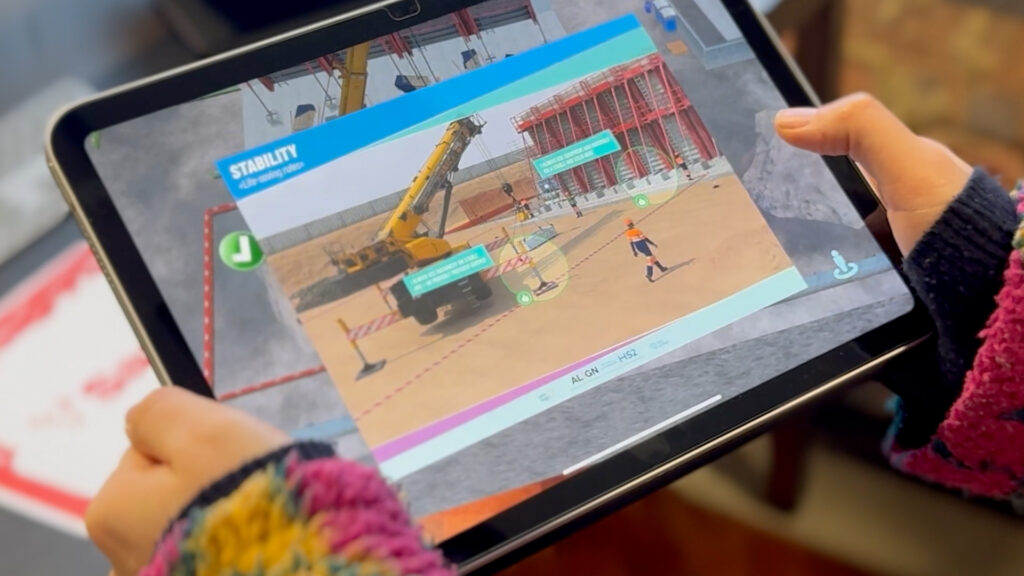
iPad showing augmented reality hazard awareness training in construction, highlighting crane stability risks and on-site safety scenarios

Using AR to Bring Hazards into Context

Augmented reality works best in hazard awareness training when it is used to add context, not complexity. Rather than introducing something entirely new, it builds on what learners already see and experience, helping them recognise risks more clearly in their surroundings.

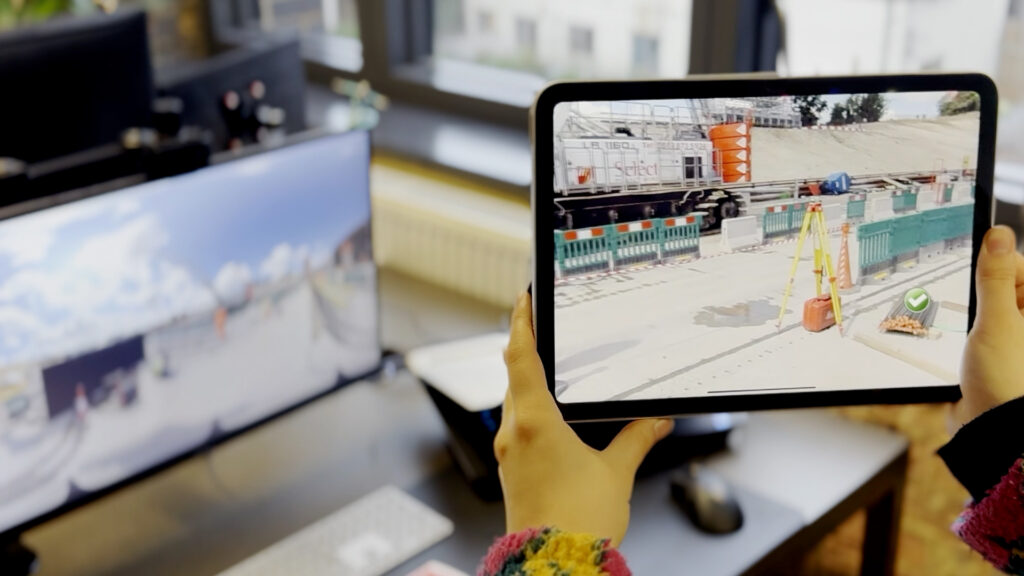
In construction, many hazards are not immediately obvious. They depend on positioning, timing, or changes in the environment. Augmented reality allows these risks to be visualised in place, overlaid onto real-world settings so learners can see exactly where and how a hazard might occur. This makes the learning far more immediate and easier to understand.

Instead of imagining a scenario, learners are looking at it. A potential risk is no longer described in abstract terms, it is shown in context, where it would actually happen. This shift makes it easier to connect training with real-world behaviour.

Importantly, augmented reality is not used in isolation. It works alongside video, discussion, and guided learning, reinforcing key messages rather than replacing existing methods. Used in this way, it becomes a practical tool that supports awareness, helping learners spot risks earlier and respond with greater confidence.

Our Approach: A Blended AR Training Tool

To make this approach practical and easy to use, we developed an iPad-based training tool designed to support hazard awareness in real-world environments. Rather than focusing on a single format, the tool brings together video, visual prompts, and augmented reality into one cohesive experience.

The aim was to create something that fits naturally into existing training sessions. It can be used during toolbox talks, small group discussions, or structured training environments without requiring complex setup or specialist equipment. Everything is designed to be accessible, intuitive, and easy to facilitate.

Learners begin by watching short, focused video scenarios that introduce common site risks. These are followed by visual discussion prompts that encourage teams to talk through what they have seen, share experiences, and identify potential hazards. Augmented reality is then used to place those risks into a real-world context, allowing learners to explore how and where hazards might appear on site.

By combining these elements, the tool supports a more active form of learning. It encourages observation, conversation, and practical understanding, helping teams move beyond simply being told about risks to actually recognising them in context.

How It Hazard Awareness Training Works in Practice

In practice, the experience is designed to feel simple and natural, fitting into the way training already happens on site. It is not a standalone activity, but part of a structured session that encourages participation and discussion.

A typical session begins with a short video scenario that introduces a situation or potential hazard. This gives everyone a shared point of reference and helps set the context. From there, learners are encouraged to discuss what they have seen, identifying risks, sharing observations, and relating the scenario to their own experience.

Visual prompts are then used to guide the conversation further, helping to highlight specific hazards or decision points that might otherwise be overlooked. This stage is important, as it allows learners to actively engage with the content rather than passively receive it.

Finally, augmented reality is introduced to place those hazards into a real-world setting. Learners can explore how risks appear in context, seeing exactly where issues might arise and how they might develop. This reinforces the earlier discussion and helps connect the training directly to on-site conditions.

By moving through these stages, the learning becomes more than a one-way transfer of information. It becomes a shared experience that builds awareness, strengthens understanding, and supports better decision-making on site.

tablet displaying AR construction training, overlaying hazard awareness training visuals onto a real site environment to support safety training

Where’s the Value?

This approach works because it shifts hazard awareness training from passive learning to active understanding. Instead of simply being told what to look out for, learners are involved in the process. They observe, discuss, and explore risks in a way that feels closer to real-world experience.

By combining video, discussion, and augmented reality, the training engages multiple ways of learning at once. Visual content captures attention, conversation reinforces understanding, and AR adds context by placing hazards into realistic settings. Together, these elements help learners build a clearer picture of risk and how it applies to their day-to-day work.

It also encourages shared learning. When teams talk through scenarios together, they bring their own experience into the session. This not only deepens understanding, but helps create a stronger safety culture where awareness is discussed openly rather than delivered top-down.

The result is more than just improved engagement. Learners are more likely to remember what they have seen, recognise hazards earlier, and feel confident in how to respond. That shift, from awareness to action, is where real impact happens.

Tangible Benefits for Construction Training

One of the key strengths of this approach is how easily it fits into existing training environments. It does not require a complete overhaul of current processes, but instead enhances what is already in place. The iPad-based format makes it simple to introduce into toolbox talks, site briefings, or small group sessions without adding complexity or downtime.

Because the content is structured but flexible, it can be used repeatedly across different teams and locations. Trainers can guide sessions in a consistent way while still allowing space for discussion and local context. This makes it particularly useful for organisations looking to standardise safety messaging while keeping training relevant to specific sites.

It also supports more practical engagement. Rather than relying on written materials or one-way presentations, learners are actively involved throughout the session. This helps maintain attention and encourages participation, even in environments where time is limited.

Ultimately, the benefit is not just in how the training is delivered, but in how it is received. When learners are more engaged and can clearly see how risks apply to their own work, they are more likely to carry that awareness onto site and apply it in real situations.

From Compliance to Getting Home Safe Everyday

In many cases, hazard awareness training is treated as a compliance exercise. The focus is on ensuring information has been delivered and understood, often measured through completion rather than application. While this is important, it does not always translate into safer behaviour on site.

The real goal of training is not just awareness, but action. Workers need to be able to recognise hazards as they emerge, assess the situation, and respond appropriately. This requires more than knowledge. It requires confidence, judgement, and the ability to apply learning in a changing environment.

A blended approach supports this shift by making training more relevant and practical. When learners see hazards in context, talk through real scenarios, and explore risks in a setting that reflects their day-to-day work, the learning becomes more meaningful. It moves from something they are told to something they experience.

This helps create a stronger connection between training and behaviour. Instead of simply knowing the rules, teams are better prepared to apply them, contributing to a safer working environment overall.

A Smarter Way to Deliver Hazard Awareness Training

Hazard awareness training in construction is not going away, but the way it is delivered is starting to change. As sites become more complex and expectations around safety continue to rise, training needs to do more than inform. It needs to prepare people for what they will actually encounter on site.

A blended approach offers a practical way forward. By combining video, discussion, and augmented reality, training becomes more engaging, more relevant, and more closely aligned with real-world conditions. It supports not just understanding, but recognition and response, which are critical in dynamic environments.

Importantly, this is not about replacing existing methods. It is about strengthening them. Simple, accessible tools used in the right way can make a meaningful difference to how training is experienced and applied.

Ultimately, the goal is straightforward. Help people see risk more clearly, talk about it more openly, and respond to it more confidently. When training achieves that, it moves beyond compliance and starts to have a lasting impact on safety.

Contact our team of experts today to learn more about how our London-based Sliced Bread Animation can produce hazard awareness training that encourage your employees to learn faster and retain information better.

FAQs on Hazard Awareness Training

1. What is augmented reality in hazard awareness training?

Augmented reality in hazard awareness training involves overlaying digital information onto real-world environments to help learners visualise risks in context. It allows workers to see how hazards might appear on site, rather than just reading or hearing about them.

2. How does AR improve construction safety training?

AR improves construction safety training by making hazards more visible and easier to understand. When learners can see risks in a realistic setting, they are more likely to recognise them on site and respond appropriately.

3. Can AR be used alongside traditional training methods?

Yes, AR works best as part of a blended approach. It complements existing methods such as toolbox talks, videos, and group discussions by adding an extra layer of context and interaction, rather than replacing them.

4. What are the benefits of using an iPad-based training tool on site?

An iPad-based training tool is portable, easy to use, and requires minimal setup. It can be used during site briefings or small group sessions, making it a practical way to deliver consistent training across different teams and locations.

5. Is AR training suitable for all construction roles?

AR training can be adapted to suit a wide range of roles, from site operatives to supervisors. Because it focuses on real-world scenarios and visual context, it can be tailored to reflect the specific risks relevant to different environments and job functions.
Recent Posts