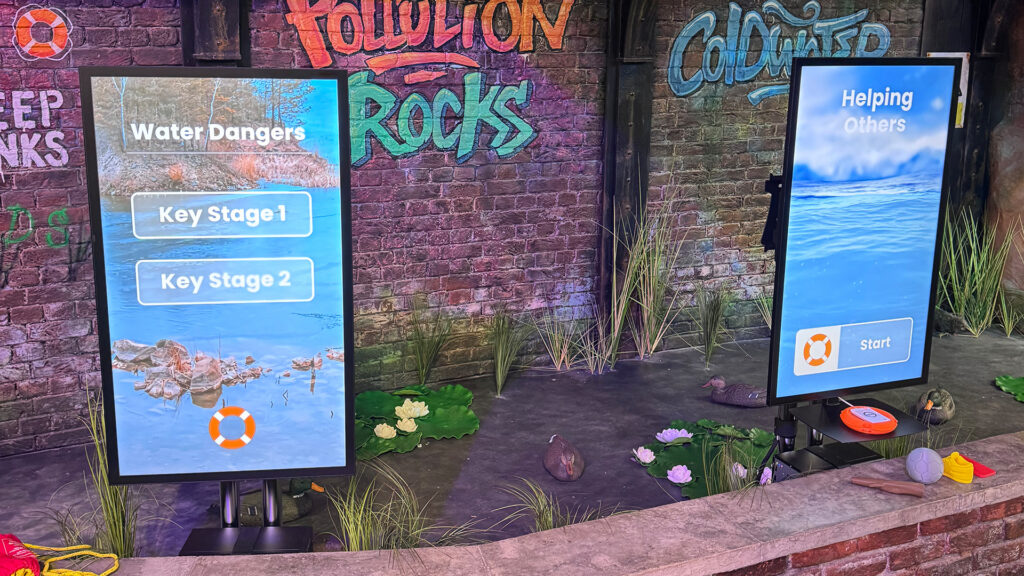
In an era defined by increasingly complex workplace hazards and a growing imperative to cultivate safety-conscious behaviours from an early age, immersive technologies specifically Virtual Reality (VR) and Augmented Reality (AR) are emerging as some of the most compelling tools available to safety educators and organisations. Far from novelty, these platforms represent a paradigm shift in how children acquire, internalise, and apply safety knowledge. This post examines the evidence base for immersive technology in child learning, with a particular focus on the implications for the safety sector.
1. The Case for Immersive Technology in Safety Education
Traditional safety training whether in the form of instructional videos, printed materials, or classroom lectures has long struggled with a fundamental limitation: passive consumption does not reliably translate into active, embodied behaviour change. Research consistently demonstrates that learning is most durable when it is experiential, contextual, and emotionally engaged.
Immersive VR and AR address this gap directly. A 2024 systematic review published in Virtual Reality (Springer) found that VR safety training delivers substantial benefits over traditional instructional approaches, particularly in hazard identification, emergency response, and behavioural readiness. Critically, participants who trained in VR reported feeling more prepared to face real hazards not merely because they had memorised procedures, but because they had enacted them in realistic, high-fidelity contexts. This distinction between declarative knowledge (knowing what to do) and procedural, embodied readiness (being able to do it under pressure) is precisely where immersive technology excels.
2. What the Research Tells Us: Immersive Technology and Child Learning Outcomes
The academic literature on immersive technology in child education has grown substantially over the past decade. A comprehensive systematic review published in Education and Information Technologies (2024) covering 117 peer-reviewed articles on VR/AR in K-12 STEM learning found that both technologies consistently improved engagement, conceptual understanding, and motivation across subject areas. The review noted rapid growth in published research since 2017, reflecting both increased confidence in the evidence base and expanding access to more affordable hardware.
For children specifically, several mechanisms underpin these benefits:
- Sense of presence and immersion: VR creates a powerful ‘feeling of being there’ that activates emotional and cognitive engagement unavailable through conventional media. A 2025 study in Springer’s Virtual Reality journal demonstrated that interactive VR outperformed traditional video teaching in measures of immersion, empathy, and learner concentration.
- Multi-sensory encoding: Immersive environments engage visual, spatial, and kinaesthetic processing simultaneously, which strengthens memory consolidation and knowledge retention a significant advantage for complex safety procedures that must be recalled under stress.
- Contextual instruction via AR: Augmented Reality overlays digital hazard warnings and instructional content directly onto real-world environments. This ‘situated learning’ approach allows children to apply safety knowledge in the context in which it will be used an approach strongly associated with transfer of learning to real-world settings.
- Inclusive and accessible learning: Research published in PMC (2024) highlights that VR technology can be especially beneficial for children with Autism Spectrum Disorders, supporting emotional regulation, social skill development, and focused attention broadening the reach of effective safety education to diverse learner profiles.
3. Immersive Technology as a Safety Training Platform for Young Learners
A 2025 systematic review in the Educational Technology Research and Development journal examining 28 empirical studies on immersive VR for children’s safety training published between 2016 and 2024 offers the most focused evidence to date for organisations in the safety sector. Its findings are instructive:
- Behavioural skill acquisition was the outcome most consistently improved by VR-based safety training with children demonstrating improved responses to hazard scenarios even days and weeks after training sessions.
- Learner engagement was markedly higher in immersive conditions compared to conventional training formats, a finding with direct implications for voluntary participation and sustained attention across multi-session programmes.
- The review identified significant gaps in fire, water, earthquake, and violence prevention safety training using VR signalling substantial, unmet opportunities for safety organisations to develop and deliver evidence-based immersive content in these domains.
- Immersion dissolves the boundary between learner and scenario. Rather than observing a hazard passively, children are placed inside it a distinction that activates the same psychological and physiological readiness responses as real exposure, without any actual risk.
4. VR and AR in Industrial and Occupational Safety: A Proven Model to Adapt
The safety sector has been one of the earliest and most enthusiastic adopters of immersive training technology in adult and occupational contexts. A 2025 review in Frontiers in Virtual Reality described how VR and AR are transforming industrial safety training by enabling ‘close-to-reality’ scenario-based learning for environments that include working at heights, hazardous materials, emergency evacuations, and heavy equipment operations scenarios that are impossible or unethical to replicate in traditional training settings.
The same principles that make immersive technology effective for adult safety training apply often more powerfully to children, who may lack the risk perception and hazard awareness that adults develop through lived experience. Immersive builds offer a structured, repeatable, and measurable pathway to develop these capacities earlier, and to do so in a manner consistent with how young learners actually engage with and process information.
Critically, modern immersive safety platforms now integrate real-time performance analytics, enabling instructors and safety professionals to track individual learner responses to simulated hazards, identify knowledge gaps, and adapt training sequences dynamically. This data-driven capability transforms safety education from a one-size-fits-all event into a continuous, measurable, iterative process.