A Chance to Explore Cooking Methods Step by Step
Today’s young adults grow up surrounded by technology, with smartphones, tablets, and immersive media shaping how they absorb information from an early age. As a result, many students find it hard to stay engaged with traditional classroom-based learning, especially in subjects that benefit from hands-on experience. Virtual reality cooking offers a refreshing alternative. It places learners directly inside a realistic, interactive kitchen where they can practise techniques, experiment, and build confidence without the pressure of a real-world environment.
In culinary education, this shift is important. VR gives students the chance to explore cooking methods step by step, repeat tasks as many times as they need, and work at their own pace. Instead of watching demonstrations from the sidelines, they are the ones completing the actions. With VR training, students can learn everything from basic knife skills to complex recipes without food waste, rising ingredient costs, or the fear of making mistakes in a busy kitchen. They might not taste the virtual dishes they create, but they do gain practical muscle memory, situational awareness, and a deeper understanding of culinary processes.
Virtual reality cooking turns learning into an active experience, giving students a safe space to practise, experiment, and build readiness for real kitchens. It is a low-risk, high-reward environment that supports modern learners in a way they are familiar with.
Why Is VR Cooking Effective for Culinary Education?
Here at Sliced Bread Animation, we specialise in creating highly immersive VR training experiences that drive behaviour change through learning. Our collaboration with Vancouver Community College (VCC) is a great example of how VR can revolutionise culinary education.
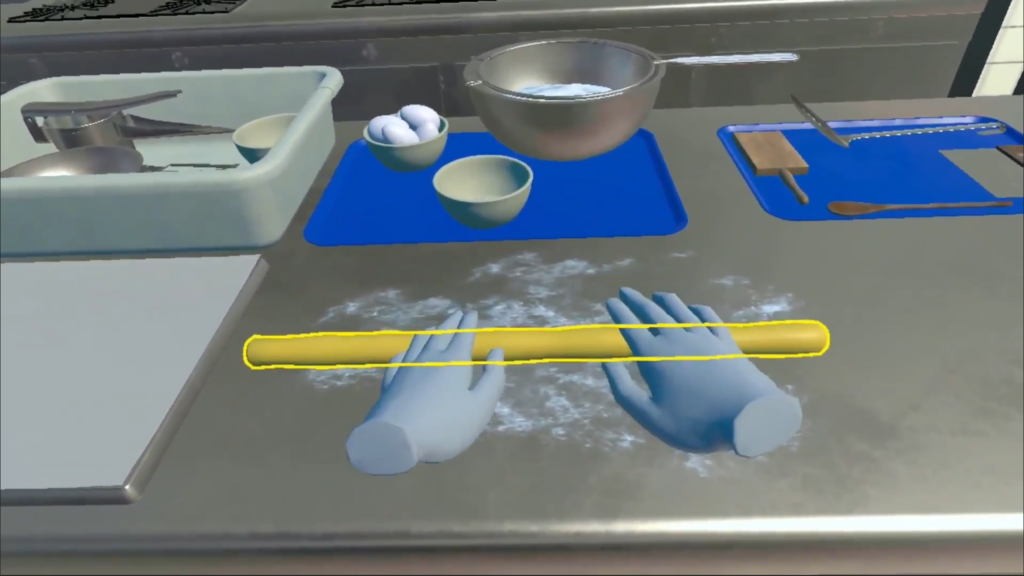
With VCC, we created a VR module allowing students to practise kitchen safety and food preparation techniques on five entry-level recipes in a simulated environment, removing the risk factors typically associated with these tasks. This approach helps students learn new skills while improving their confidence and information retention.
Research backs up the notion that VR enhances learner engagement and retention for practical, hands-on subject matter. According to a 2024 meta-analysis in the International Journal of STEM Education, VR training for practical skills generated “a significant moderate positive effect.” The journal also noted that combining hands-on VR skills development courses with traditional classroom methods is the most effective learning method among all instructional approaches studied.
Looking for another big advantage of VR cooking training? Due to their repeatable nature, VR modules can save you a tremendous amount of time, hassle, and money compared to traditional hands-on kitchen modules. While traditional learning involves expensive kitchen equipment and ingredients, VR modules replicate these elements in a risk-free way.
Of course, a VR module might cost more upfront, but you can reuse it over and over for years to come without investing another quid. On the other hand, real-world culinary training has many repeated costs, from maintenance and repairs for kitchen appliances to buying food for use in recipes.